

In 1950, Bob got hired at IBM.
Or GM. Or Ford.
It doesn’t really matter.
The company wasn’t just where Bob worked - it was who he was.
When people asked Bob what he did, he didn’t say “I’m an accountant.” He said “I work for IBM.”
He stayed at the company for 38 years.
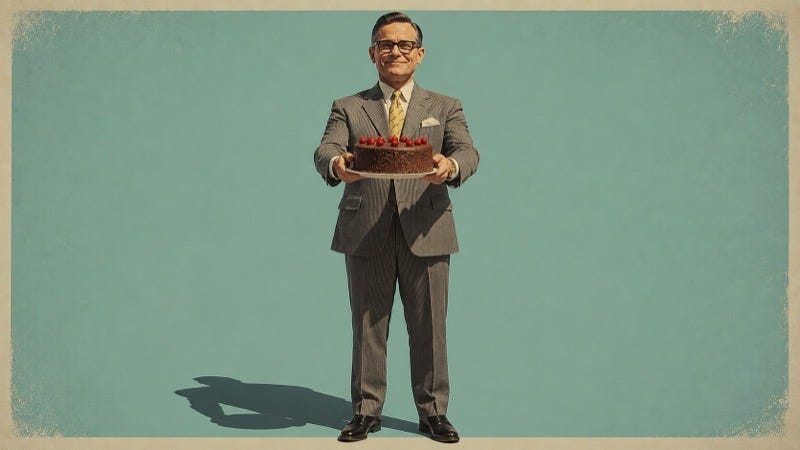
When Bob turned 65, they gave him a gold watch, a pension, and a retirement party with a chocolate cake from the corner store. It had vanilla icing and those little red dot candies on it, which is what Bob liked best.
That was loyalty.
Bob showed up. He worked hard. He bled company colors. And, in return, the company took care of him. And gave him a chocolate cake.
Loyalty was good for Bob.
Today? Things are different.
People change jobs every two to four years. They leave a job for a measly 10% raise and quit by text or TikTok.
Leaders complain that loyalty is dead.
Everybody nods in agreement and thinks back to those good ole days when Bob was around and loyalty was everything.
There’s only one problem with that concept of loyalty.
It’s a lie.
Loyalty Had Nothing To Do With It
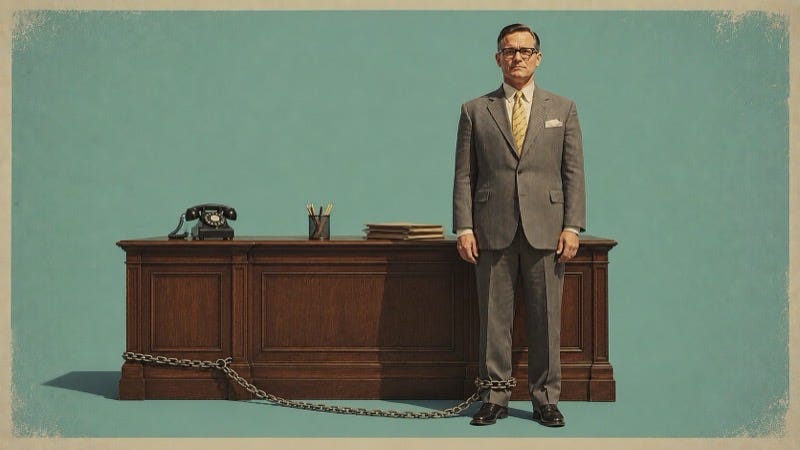
Bob didn’t stay at his company for 38 years because he was loyal.
He stayed because he couldn’t leave.
His family’s healthcare was tied to the company.
There was no COBRA. There was no backup plan.
His social circle was dominated by company colleagues and company-sponsored events. In fact, the entire town revolved around the company - and so did Bob’s life. Heck, even the kids baseball team was sponsored by the company.
Bob’s pension didn’t vest until year 30.
If he left the company he wouldn’t just be leaving a job, he’d be leaving his entire livelihood and putting his family at risk.
Quitting wasn’t an option. So he stayed.
And we’ve called that loyalty.
But it wasn’t.
It was forced compliance.
It was a system designed to make staying easier than leaving.
The gold watch wasn’t a reward for loyalty.
It was the series finale after 38 years of having no other channels to choose from.
A Dog Tied To A Tree Isn’t Loyal To The Tree
Here’s the thing about loyalty.
You can only be loyal if you can choose not to be.
A dog tied to a tree isn’t loyal to the tree.1
A prisoner isn’t loyal to the prison.
An employee with no other options isn’t loyal to the company.
They’re just stuck.
Loyalty requires the freedom to leave.
Bob’s generation didn’t have the freedom to leave. With pensions, healthcare, geographic constraints, limited skills, and no professional networks, leaving their job could be catastrophic to the entire family.
Fortunately, for all of us today, workers have options.
Skills are transferable. Healthcare exists outside of your employer. Your business network is available on LinkedIn.
Today you can find a new job from your couch in your pajamas while eating your Fruit Loops, which I keep telling you not to eat on the couch. That’s why we have dining room tables.
For the first time in industrial history, employees have the freedom to leave their job whenever they want.
Which means, for the first time in industrial history, real loyalty is finally possible.

The Two Sides of Loyalty
After all these years, loyalty can finally be two-sided.
If you pay me fairly, I will give you my best work.
If you treat me with respect, I will treat the company with respect.
If you invest in me, I will invest in you.
That’s loyalty.
It’s a relationship between people who could part ways, but choose not to.
And if everything always stayed that way, it’d be a much better world.
Which brings me to my client, the VP.
The Most Loyal Employee I Know
I have a client who is an exec at a Fortune 500. Let’s call him John. No, sorry, we’re going to call him Jon. I’m opposed to silent letters and refuse to use them wen I don’t haf to.
Jon has worked at his company for 14 years (which is like 25 in 1950 years.)
He’s consistently a top performer and has risen through the ranks to his VP role. Jon is highly respected, a clear leader in the company. Even better, he genuinely loves his job.
Jon could be the poster boy for loyalty.
His dimples and stunningly good looks make him a shoe-in for the cover of the loyalty calendar.
A few weeks ago, Jon found out that his compensation is at the very bottom of his pay grade. Basically, he’s being paid 30% less than his peers.
There are people in the same role as him, many with less experience, making significantly more than him.
Jon was pissed, as well he should be - especially after 14 years of being a top performer.
So he went to his boss to talk about it.
His boss said the budget was tight this year - which it is.
His boss said they’ll try next year - which they probably will.
But that’s not the point.
The point is that Jon knew he was being loyal to the company by performing the way that he does. And the company knew that they were not being loyal to Jon by compensating him the way that they did.
Jon will still stay at the company. He knows that.
His boss knows that.
Everyone knows Jon will stay at the company.
He won’t even threaten to leave, because he doesn’t want to.
But he’s still not happy.
In fact, he’s pissed.
But he keeps showing up. Keeps doing great work. Keeps being one of the most reliable people in the entire organization.
The problem is not that the company isn't giving him the raise now - though, that is a problem, just not the main one.
The problem is that they didn't address it on their own. They kept letting the person who adds so much value to the company get compensated far less than others. And it took Jon calling out this discrepancy to even have the conversation about the company’s loyalty.

When Loyalty Hurts More Than Helps
Jon’s loyalty is hurting him more than it’s helping.
His loyalty is the reason they don’t pay him market rate.
It’s the reason they’ve invested in flight risks instead of investing in him.
The company isn’t rewarding Jon for being loyal, they’re exploiting him.
Jon could have walked into his boss’s office and said “I know what I’m worth. Pay me, or I’ll start looking for another job.”
He has the skills. He has the network. He has the options.
He just doesn’t want to use them.
Because he loves his job.
He just wants to feel like his job loves him.
The Same Word, Two Meanings
Here’s the thing.
Jon’s company isn’t evil. His boss isn’t a villain. But they’re operating on an outdated definition of loyalty.
They think loyalty means Jon will stay no matter what.
Jon thinks loyalty means he should stay no matter what.
They’re both right.
They’re both wrong.
And they’re both uncomfortable about it.
That’s the problem.
A Different Definition Of Loyalty
Maybe it’s time we all asked ourselves what loyalty actually means in today’s world.
Not what it meant when Bob was at IBM. Not what we wish it still meant. But what it actually means now.
Because loyalty isn’t dead. It just looks different than it used to.
Real loyalty today isn’t about staying. It’s about creating a relationship that rewards both sides.
It’s about two parties understanding and accepting each other’s goals and limitations. And still choosing to support one another.
That’s the type of choice Bob never got.
And no chocolate cake can make up for that.
P.S. Don’t get me wrong, Bob lived a great life. Thanks to his pension, he and his wife, Janice, enjoyed their golden years taking cruises to all the places on their bucket list. Bob is remembered by his 3 kids and 9 grandchildren, who have chocolate cake with red candies every year on his birthday.
If your team's leadership needs work and you want someone who'll tell you the truth about why — let's talk.
Don’t tie the dog to the tree. That’s not nice.
Bob’s story is uncannily similar to my late grandfather’s. He worked at IBM for decades (the white shirt + tie era), retired in his 50s with a pension, and lived a very comfortable life at his beachfront home. A very different time! For me, loyalty means two parties consistently committing to each other, both emotionally and financially.
what does loyalty mean to you? I'd love your definition - both from an employee and employer perspective.