
Nobody else is going to say it, so I will.
There are serious problems with female leaders in the workplace.
Problems we pretend don’t exist.
But they do exist.
And we have to stop ignoring them.
So here it is, the four problems with women in leadership.

Problem #1: They Apologize Too Damn Much
Enough with the apologies already.
C’mon now.
“Sorry, I didn’t know…”
“Sorry to bother you, but…”
Female leaders seem to apologize for everything. They apologize for asking questions. For taking up space. It’s like they apologize for simply existing in the room.
And you know what?
Maybe they should be apologizing.
Maybe it actually is all their fault.
If so, that’s fine. Take the blame.
See if I care.
Except here’s the thing.
If you pay attention to what they’re saying, female leaders are usually not apologizing because they did something wrong. They’re apologizing as a way of acknowledging the other person’s experience.
That’s called empathy.
“Sorry to interrupt” doesn’t mean “I’m wrong to speak.”
It means “I see that you were talking and I’m aware this might disrupt your thought process.”
So yeah, women apologize more than men.
Because they actually give a shit about how other people feel.
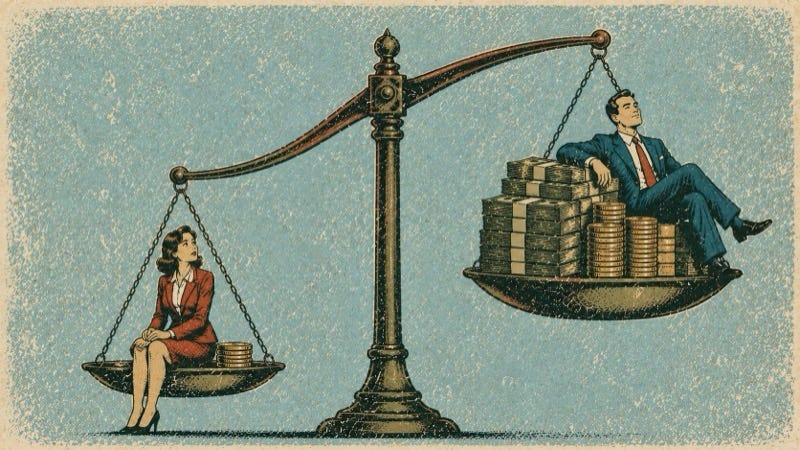
Problem #2: Female Leaders Are Paid Less Than Men
Women earn less than men for the same job. That’s just a fact.
On average, they earn about 19% less.
The most obvious reason is that they’re just not as skilled at the job as men. After all, people get paid based on what they’re worth, right?
Wrong.
People get paid based on how well they negotiate. And women don’t negotiate as aggressively as men do for their salary. Not because they’re bad at asking. But because they trust the system.
They believe that if they do good work, someone will notice and pay them accordingly.
Men are different. We don’t trust like that. We assume nobody’s going to hand us anything, so we have to take it.
But trust is important. Every functioning team requires it. And you can’t build a healthy culture without it.
So yeah, women get paid less.
Because they trust more than the rest of us.
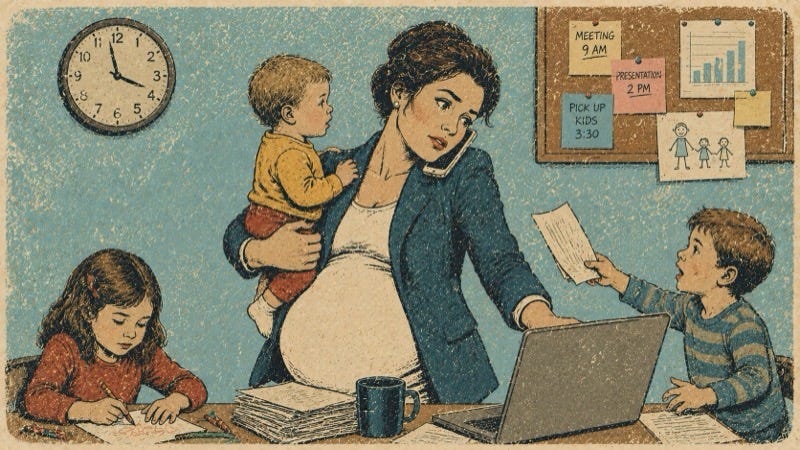
Problem #3: Women Get Pregnant
Women take off many months, sometimes years, to have children and raise them.
As if that’s not bad enough, they sometimes have to take kids to school and pick them up. God forbid there’s a sick day, a snow day or a parent-teacher meeting.
Seriously, how are we supposed to run a company with behavior like that? And how are they supposed to be effective leaders when they’re constantly pulled away?
You know what good leadership is?
It’s patience when someone’s melting down for no reason.
It’s being calm and organized when everything feels chaotic.
It’s motivation when nobody wants to do the thing you’re asking of them.
It’s inspiration when the task seems impossible.
And it’s decision-making with incomplete information and no time to think.
That’s leadership.
Turns out, that’s also motherhood.
Mothering children is leadership at the most strenuous level.
You’re managing tiny humans who can’t regulate their emotions, don’t understand consequences, and actively resist your direction. And you have to do it while keeping them alive, fed, and not completely feral.
Compared to that, managing a team of adults who can tie their own shoes is kind of a walk in the park.
It’s no wonder that studies found mothers to be the most productive people in the workforce.
Not despite having kids.
Because of having kids.
So yeah, motherhood pulls women away from the office.
And puts them into the hardest leadership training there is.

Problem #4: Female Leaders Don’t Promote Themselves
Women don't advocate for themselves. They undersell what they can do. And when they're offered a role they're not sure about, they'll actually say so.
Honestly, if they’re not confident in themselves, why should we believe in them?
Except that’s all backwards.
Women don’t underestimate their abilities. And they don’t lack confidence. In fact, they’re fairly accurate in estimating their own abilities.
It’s men who screw it all up by overestimating themselves.
When women say they can do something, they’re sure they can.
When men say it, they think they probably can. Maybe. If they get lucky.
Honesty is an important element of great leadership.
You can’t make good decisions if you don’t know what you don’t know.
Women know what they don’t know.
Men figure it out later. Usually when they’re trapped in the hole they’ve dug.
So yeah, women don’t advocate for themselves enough.
Because they’d rather be honest, than guess on their chances of success.
The Problem Was Never Female Leaders
Here’s the thing I learned about all four of these problems.
They’re not problems with women.
They’re problems with everybody else.
We’ve built a system that rewards overconfidence over competence.
We reward aggression over empathy.
We think self-promotion is more important than self-awareness.
And we’ve convinced ourselves that negotiation is better than trust.
And what do we punish women for?
All the traits that define great leadership:
Empathy
Trust
Self-awareness
Resilience
So yeah, there are problems with female leaders. But the problem is that we keep acting like their behaviors are weaknesses rather than strengths.
The problem is we need more female leaders, not fewer.
Maybe the problem was never that women didn’t lead like men.
Maybe the problem is that we spent decades teaching women to act like mediocre men.
And maybe it’s time all the mediocre men out there started acting a little bit more like exceptional women.
P.S. Forward this to a rockstar female leader (or a mediocre man). I know you know them.
Your patterns that are reinforcing the wrong traits and punishing the right ones - those won't change on their own. They change when you understand what you’re doing and why. That's what the free Leadership Diagnostic Workshop will show you. Reserve your spot now.
This is so sharp, and it lines up painfully well with what I see when I zoom out on the “geometry” of a lot organizations: we’ve built systems that reward overconfident, low‑empathy noise and then act surprised when thoughtful, self‑aware women get penalized for the exact traits that make complex, chaotic teams survivable. The reframing you offer—that apologizing, trusting, telling the truth about your own limits, and leading while raising humans are not bugs but leadership features—is exactly the attractor shift many companies need if they want their culture to evolve instead of just hiring more “mediocre men” and calling it progress.
So many great nuggets in this article! I’m sharing with all the great women and mediocre men!